Ban on The Grasshopper Lies Heavy
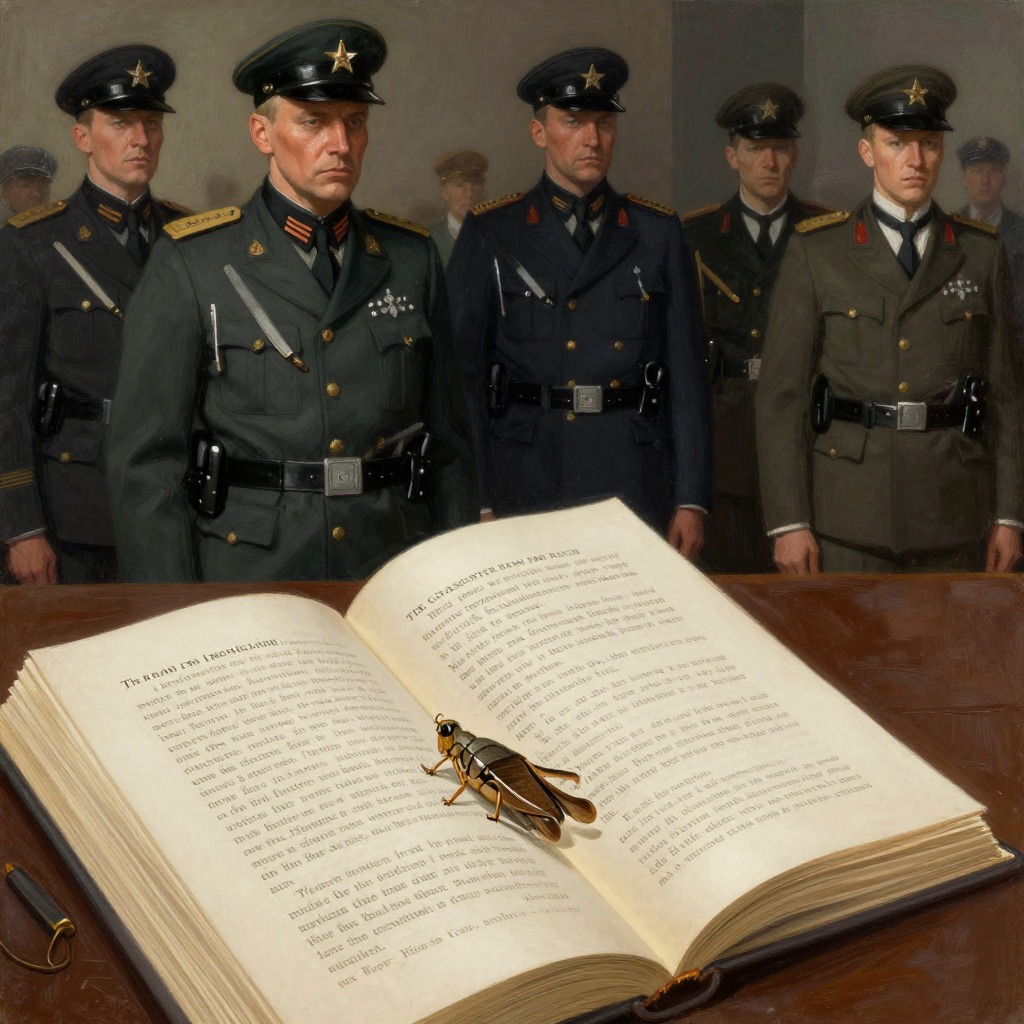
The Ban on The Grasshopper Lies Heavy is a sweeping prohibition enforced across the German Reich and its territories, including the East Coast of the United States, against Hawthorne Abendsen's alternate-history novel in which the Axis loses World War II. The ban reflects the Nazi regime's fear of the book's subversive power: its depiction of a world where Germany and Japan are defeated, its implicit critique of Nazi ideology, and its potential to inspire resistance. The novel is classified as forbidden to all racial groups, though enforcement varies by the armband system, and its very existence provokes anxiety and fascination among German officials, including Consul Hugo Reiss, who contemplates assassinating Abendsen.
Scope and Enforcement of the Ban
The ban on The Grasshopper Lies Heavy extends throughout the Reich and its spheres of influence. In the Pacific States of America, the novel is not banned; it is openly sold and discussed, as Juliana Frink finds a stack of copies in a Denver hotel bookstore. On the East Coast, however, the book is forbidden to everyone, regardless of racial classification. The armband system determines the severity of enforcement: Slavs, Poles, and Puerto Ricans face the most severe restrictions on what they can read, while Anglo-Saxons have greater access to libraries and museums, but even they are prohibited from possessing this particular novel. Joe Cinnadella, a German agent posing as an Italian truck driver, reads the book in secret, hiding it in a pillow and reading it in the toilet, precisely because it is banned. The novel's prohibition is so absolute that possession alone could lead to execution, as Juliana Frink reflects when she asks Joe whether people are still shot for reading it.
Official Reactions and Anxiety
The ban generates intense anxiety among German officials who encounter the book. Consul Hugo Reiss, the Reichs Consul in San Francisco, reads a smuggled copy and finds himself deeply disturbed by its power. He describes the novel as "dangerous" and reflects that "more pressure should have been put on the Japs to suppress this damn book." Reiss is particularly unsettled by the book's depiction of the death of Adolf Hitler and the defeat of Germany, which he finds "somehow grander, more in the old spirit than the actual world." He suspects the author is Jewish—imagining his real name is "Abendstein"—and contemplates having him assassinated by sending an Einsatzkommando to the High Castle. However, Reiss ultimately abandons the plan, fearing that if it backfired, he would end up in Protective Custody or a gas chamber. The novel's emotional impact on Reiss is so strong that he feels "sick with rage" and wonders whether the war will ever truly end.
The Novel's Subversive Power
The ban exists because the novel's content is fundamentally subversive to Nazi ideology. The Grasshopper Lies Heavy imagines a world where the Allies win World War II: Franklin D. Roosevelt is not assassinated in Miami, the United States arms itself and defeats Japan, and Germany is crushed. The book depicts the trial of Hitler, the defeat of the Nazi Party, and a world where the British Empire and the United States divide global power. For German readers like Reiss, the novel's power lies in its ability to evoke an alternate reality that feels more noble and heroic than the actual world of German hegemony. Reiss reflects that the novelist "knows humanity, how worthless they are, ruled by their testicles, swayed by cowardice," and that the book appeals to "base lusts." The ban is thus an acknowledgment of the novel's dangerous capacity to make readers imagine a different world, one in which the Axis lost and the values of the Allies—democracy, freedom, and justice—prevailed.
The Oracle and the Book's Origin
The novel's creation is itself intertwined with the I Ching, the Chinese oracle that many characters in the story consult. Hawthorne Abendsen reveals to Juliana Frink that he wrote the book by consulting the oracle for thousands of decisions: historic period, subject, characters, plot. The oracle told him it would be a great success. When Juliana asks the oracle why it wrote the novel, she receives the hexagram Inner Truth, which she interprets as meaning that the book is true—that Germany and Japan really lost the war. This revelation, which Abendsen initially resists, suggests that the ban on the novel is not merely a political prohibition but a suppression of a deeper truth about the nature of reality itself. The ban, in this light, becomes an attempt to prevent readers from glimpsing an alternate world that might be more real than the one they inhabit.